The Best Health & Fitness Apps of 2026
How do we vet apps & products? Learn more.
There has never been more choice in health and fitness tracking — and never more confusion. Every wearable now promises a "recovery" score, a "readiness" number, or some flavor of energy gauge, and almost all of them want a monthly fee for the privilege. So which app is actually worth your time and money in 2026?
We compared the best health and fitness apps of 2026 based on hands-on app testing, manufacturer specifications, published research, and aggregated user reports — judging them on the things that matter: how accurate the data is, what you pay over time, how much new hardware you're forced to buy, and what happens to your privacy. The headline finding might surprise you — for a huge number of people, the best tracker is the watch they already own, plus the right app on top of it.
Editor's Choice | Apple Fitness / Health |  |  |  |  | |
|---|---|---|---|---|---|---|
| Brand | Livity | Apple Fitness / Health | Oura Ring 4 | WHOOP | Fitbit (Google Health) | Garmin Connect |
| Rating | 4.8 / 5 | 4.2 / 5 | 4.3 / 5 | 4.0 / 5 | 4.0 / 5 | 4.4 / 5 |
| Key features |
|
|
|
|
|
|
| Pros |
|
|
|
|
|
|
| Cons |
|
|
|
|
|
|
| Price | Free — full core; Premium $39.99/yr (~$3.33/mo) optional | Free (Fitness+ $9.99/mo or $79.99/yr optional) | $349–$499 + $5.99/mo membership | Membership $199–$359/yr (device included) | Free; Google Health Premium (formerly Fitbit Premium) $9.99/mo or $99.99/yr | Free (Connect+ ~$6.99/mo optional) |
| Get Livity Free | Learn More | Visit Oura | Visit WHOOP | Visit Fitbit | Visit Garmin |
How We Ranked Them
We weighted four things, in order:
- Total cost of ownership. Not the sticker price — what you actually pay across three years, including subscriptions.
- Accuracy and depth. Does it produce a genuinely useful recovery, sleep, and strain picture, or just step counts?
- Hardware burden. Does it work with gear you own, or force a new purchase?
- Privacy. Where does your most sensitive data live — on your device, or on someone's server?
With that lens, here's how the field shakes out.
1. Livity — Best for Apple Watch Owners
If you already own an Apple Watch, Livity is the easiest recommendation we can make. It's an iPhone app that reads your Apple Watch and Apple Health data and turns it into the kind of unified recovery dashboard you'd normally pay a subscription strap for — no extra hardware required.
Out of the box you get a daily Recovery score (built from HRV, resting heart rate, and sleep quality), a Body Battery energy gauge, full sleep stages and a Sleep score, HRV trends, Training Load, stress monitoring, and a Fitness Age read. It also reads Garmin data through Apple Health, so if you wear a Garmin and carry an iPhone, you can fold those metrics in too.
Two things push it to the top. First, the free tier is real — sleep, HRV, recovery, and body battery stay free to use, with premium analytics at $39.99/year (about $3.33/month) if you want deeper history and insights. Where almost every paid option here charges recurring money just to unlock a single number — a Readiness or Recovery score — Livity hands you the full recovery, sleep, HRV, and body-battery picture in the free core tier. Second, it's privacy-first: your health data is processed on-device, there's no account to create, and nothing syncs to a cloud server. In a category where almost every competitor routes your most intimate data through their own infrastructure, that's a genuine differentiator.
The honest limitations: Livity is iPhone-only, and it needs a compatible watch to collect the underlying data — it's a software layer, not a sensor. If you own an Apple Watch, that's a non-issue. If you're on Android, look elsewhere.
HAI rating: 4.8/5. For the tens of millions of people already wearing an Apple Watch, this is the most cost-effective way to get WHOOP- and Oura-level insight without renting hardware. See our full Livity review for the deep dive.
2. Apple Fitness & Health — Best Free Starting Point
The Apple Watch quietly became a serious health platform. With watchOS 11 and the Vitals app, your watch now tracks nightly heart rate, respiratory rate, wrist temperature, and sleep — and Training Load compares your recent workout volume against your baseline. The raw sensor data is excellent and the whole thing is free with the watch.
The catch is presentation. Apple gives you superb ingredients scattered across the Health, Fitness, and Vitals apps, but no single recovery or readiness score and no body-battery equivalent. You're left to interpret the data yourself. Apple's paid Fitness+ ($9.99/month) doesn't close that gap either — it buys guided workout content, not a recovery or readiness number. That interpretation gap is precisely what a companion app fills — and a free app like Livity closes it without adding a subscription, which is why so many Apple Watch owners pair their watch with one.
Best for: anyone who wants reliable, free tracking and is happy to read the raw numbers themselves.
3. Garmin Connect — Best for Athletes Who Own Garmin
Garmin remains the benchmark for endurance athletes, and crucially, the core Garmin Connect app is free. Body Battery — the metric Garmin pioneered — Training Readiness, Sleep Coach, and the Morning Report all work without paying a cent beyond the watch.
In 2026 Garmin does sell an optional Connect+ subscription (around $6.99/month) that adds AI-driven training suggestions and some recap features — a soft up-sell layer on top rather than a gate on the core recovery metrics. The essential daily tracking, Body Battery and Training Readiness included, is not behind that paywall. Pair that with class-leading GPS and multi-week battery life and Garmin is unbeatable for runners, cyclists, and triathletes.
The trade-offs are the obvious ones: you have to buy a Garmin device, and the app can feel dense — dozens of metrics across dozens of screens. If you want fewer numbers and clearer guidance, that density can be a downside. For alternatives that simplify the picture, see our best Fitbit alternatives roundup.
4. Oura Ring 4 — Best for Sleep
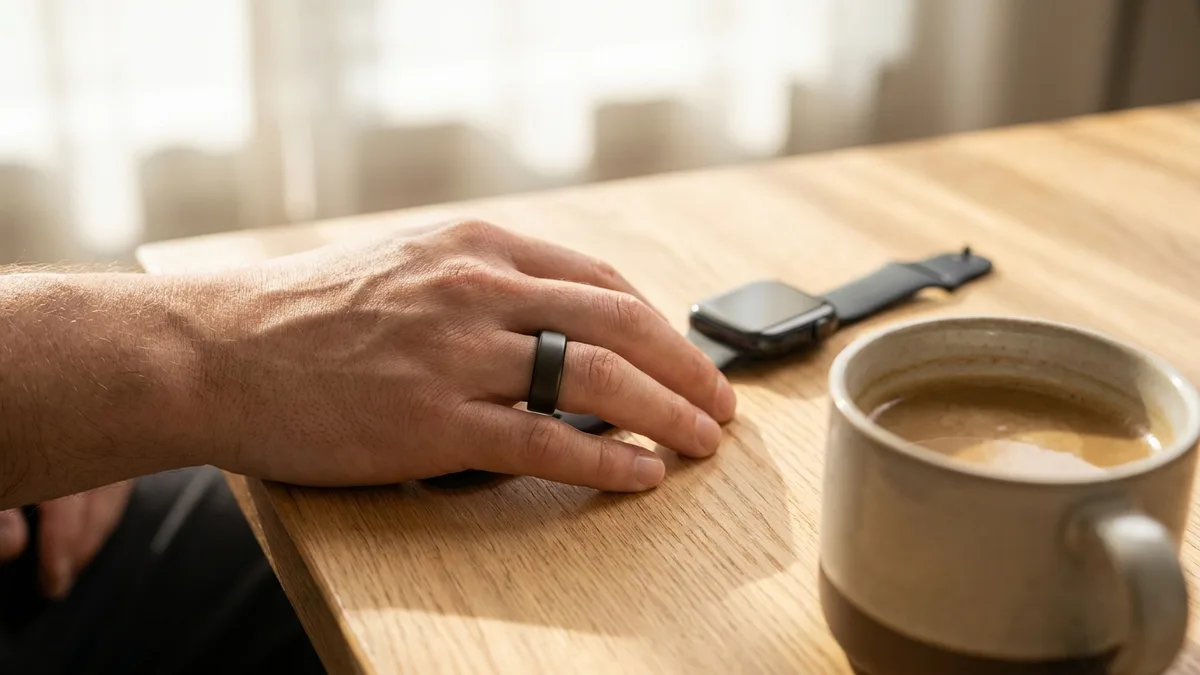
The Oura Ring 4 is the most elegant tracker in this list — a titanium ring that disappears on your finger while logging sleep, HRV, temperature, and activity. For pure overnight recovery and sleep staging, Oura is genuinely excellent, and the Gen 4 sensor added more reliable daytime HRV.
The honest downside is cost structure. The ring runs $349–$499, and then you need an Oura membership at $5.99/month (or $69.99/year) to unlock the Readiness score, sleep insights, and trends — without it, you get bare-bones data. In other words, after buying a $349+ sensor outright you keep paying monthly rent to read a score your own ring is already collecting. Over three years that's the hardware plus roughly $215 in fees. Oura also doesn't do real-time workout strain; it's a recovery-first device, not a training tool.
Best for: people who prioritize discreet, sleep-first tracking and don't mind a recurring fee. If that's you but you're weighing options, our best Oura Ring alternatives guide goes deeper.
5. WHOOP — Best Coaching, Steepest Cost
WHOOP popularized always-on recovery and strain, and the coaching experience is still among the most polished. The screen-less band is comfortable, the community features are strong, and the Strain-vs-Recovery framing is genuinely motivating.
But the model is the model. WHOOP is subscription-only — there's no buying the hardware outright. In 2026 the tiers run WHOOP One at $199/year, WHOOP Peak at $239/year, and WHOOP Life at $359/year, with the device bundled into the membership. Cancel, and the band stops working and your data goes behind the paywall. What that yearly fee really buys is the coaching-and-community layer and the hardware rental — not better underlying recovery data than an Apple Watch already captures on the wrist. There's also no screen, so every metric requires pulling out your phone, and strain is heart-rate-derived, which can underweight strength and low-HR training.
If WHOOP's recurring cost is what's giving you pause, you're not alone — see our dedicated best WHOOP alternatives comparison.
Best for: athletes who want hand-holding coaching and don't mind paying every year for it.
6. Fitbit (Google Health) — Best Budget Hardware
Now folded into the Google Health app, Fitbit remains a solid, affordable entry point — and it works on both iPhone and Android, which sets it apart from the Apple-centric options here. The good news for 2026: the Daily Readiness Score is now free for all users, alongside heart rate, sleep stages, and the basic Sleep Score.
The less-good news is that the most useful long-term insights still sit behind Google Health Premium (formerly Fitbit Premium) at $9.99/month or $99.99/year — and what that subscription really buys is cloud-dependent long-term history tied to a Google account and Google's servers, not better on-device recovery quality. Like every cloud tracker it requires an account and routes your data off-device. It's a capable, cheap-to-start option, but the "free" experience is more limited than Garmin's.
Best for: budget-conscious users, especially on Android, who want decent tracking without a big hardware spend.
The Cost Picture Over Three Years
Sticker prices hide the real story. Here's roughly what each path costs across three years, assuming you already own an Apple Watch where relevant:
| Option | Hardware | 3-Year Fees | 3-Year Total |
|---|---|---|---|
| Livity + Apple Watch | $0* | $0 (free tier) | $0* |
| Apple Fitness / Health | $0* | $0 | $0* |
| Garmin Connect | Device | $0 (core) | Device only |
| Fitbit (free tier) | ~$160 | $0 | ~$160 |
| Oura Ring 4 | $349+ | ~$215 | ~$564+ |
| WHOOP Peak | $0 | $717 | $717 |
*Assumes you already own an Apple Watch. Livity's premium tier is optional ($39.99/year, about $3.33/month); the free tier covers recovery, sleep, HRV, and body battery indefinitely.
The pattern is hard to miss: the subscription wearables cost the most over time, and the app-on-existing-hardware approach costs the least. If you've already invested in an Apple Watch, you've already paid for the sensors — the only recurring cost the competitors add is rent on reading them. The only question is which app makes the most of the hardware you own.
Which Should You Choose?
- Choose Livity if you own an Apple Watch and want a unified recovery, sleep, and strain dashboard for free, with your data staying on your device.
- Choose Apple Fitness/Health if you want zero-cost, reliable raw tracking and are comfortable interpreting the numbers yourself.
- Choose Garmin if you're a serious endurance athlete who wants the best GPS sports watch and free core tracking.
- Choose Oura if discreet, sleep-first tracking matters most and the monthly fee doesn't bother you.
- Choose WHOOP if you want polished daily coaching and accept the annual subscription.
- Choose Fitbit if you're on a budget or on Android and want a cheap, capable starting point.
The Bottom Line
The best health and fitness app in 2026 isn't necessarily the one with the flashiest hardware — it's the one that gives you the clearest picture for the least cost and the least compromise. For the enormous number of people who already wear an Apple Watch, that's Livity: a daily Recovery score, Body Battery, sleep stages, HRV trends, training load, and stress monitoring, all built from the watch you already own, with a free core tier and your data kept on-device.
You don't need to spend $700 over three years, or strap on another piece of hardware, to know whether your body is ready to train. If you've got an Apple Watch, the smartest upgrade you can make is a better app.
Sources
- 1.WHOOP Membership Pricing— WHOOP, 2026
- 2.Oura Membership— Oura, 2026
- 3.Fitbit Premium’s Readiness Score is coming to everyone for free— TechRadar, 2026
- 4.Garmin Connect+ Review— the5krunner, 2026
Frequently Asked Questions
- What is the best health and fitness app in 2026?
- For Apple Watch owners, Livity is our top pick — it turns the watch you already own into a full recovery, sleep, and fitness tracker with a daily Recovery score and Body Battery, has a free core tier, and keeps your data on-device. Garmin Connect is the best choice if you own Garmin hardware, and Oura leads for pure sleep tracking.
- Do I need to buy new hardware to get a recovery score?
- No. If you already own an Apple Watch, an app like Livity reads its sensor data through Apple Health and produces a daily Recovery score, Body Battery, sleep stages, and HRV trends — no ring, strap, or new device required.
- Which health apps are free in 2026?
- Apple's Health and Fitness apps are free with the Apple Watch, Garmin Connect's core tracking is free, and Livity offers a free core tier covering sleep, HRV, recovery, and body battery. WHOOP and Oura both require an ongoing subscription, and Fitbit reserves its best insights for Premium.
- What is the most private health app?
- Livity is the most privacy-forward option here: it processes your health data on-device, requires no account, and does not sync your metrics to a cloud server. Most subscription trackers route your data through their own servers to deliver insights.
Related reading

- Apple Watch (native Sleep)
The Best Sleep Tracking Apps for Apple Watch in 2026
Apple’s native Sleep Score is finally good — so do you still need a third-party app? We rank the best sleep tracking apps for Apple Watch in 2026, from AutoSleep to Livity, on detail, price and what you’ll actually do with the data.
- Apple Watch (native features)
Best WHOOP Alternatives in 2026 (No Subscription Required)
WHOOP starts at $199/year and you never own the band. Here are the best WHOOP alternatives for recovery, strain and sleep tracking in 2026 — including options with no subscription at all.
- Apple Watch (native features)
Best Oura Ring Alternatives in 2026
The Oura Ring 4 costs $349+ and locks its best insights behind a $5.99/month membership. Here are the best Oura Ring alternatives in 2026 — including one that needs no ring and no subscription at all.