Fitbit Air Review (2026): Is the Screen-Free Band Worth It?
How do we vet apps & products? Learn more.
Google has spent the last few years quietly absorbing Fitbit, and in May 2026 it finished the job. The old Fitbit brand is being folded into Google Health, the Fitbit app has become the Google Health app, and the first device born entirely inside that new world is the Fitbit Air — a screen-free band that costs $99.99 and asks you to live almost entirely inside Google's ecosystem.
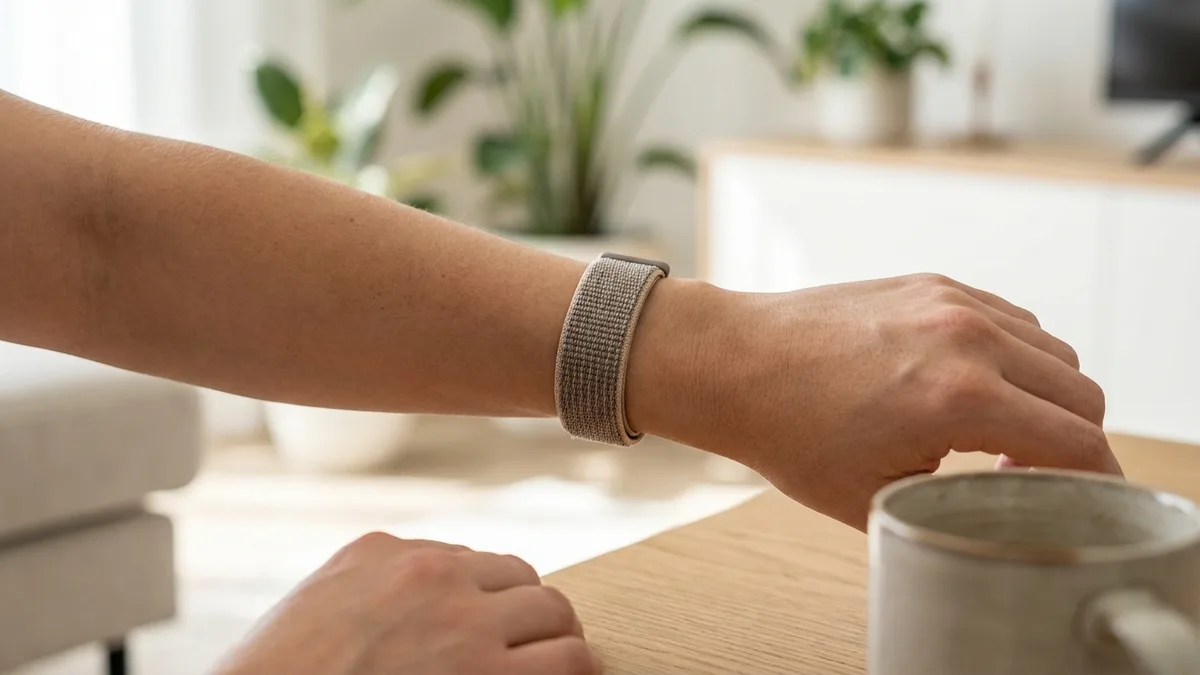
It is the most WHOOP-like thing Google has ever shipped: a tiny, displayless tracker that wants to be on your wrist 24/7 and feed everything back to an app and a coach. The question this review answers is simple. Is the Fitbit Air actually worth it, or is the screen-free idea better in theory than on your arm?
Fitbit Air
- Screen-free band, ~12 g, swappable wristbands
- 24/7 heart rate, HRV, resting heart rate, SpO2
- Heart-rhythm monitoring with AFib alerts
- Automatic sleep stages and sleep-duration tracking
- Automatic workout detection and Active Zone Minutes
- Up to ~1 week battery; USB-C magnetic charging cradle
Our Rating:3.8
What the Fitbit Air actually is
The Fitbit Air is a small sensor pod — about 12 grams with a band attached — that slots into swappable wristbands. There is no display at all. Google's pitch is that by stripping the screen, it can make the band lighter, cheaper, and more comfortable to wear overnight, which is exactly when most people take a chunky smartwatch off.
For the hardware, you get a genuinely capable sensor stack for the money:
- 24/7 heart rate, resting heart rate, and heart-rate variability (HRV)
- Heart-rhythm monitoring with AFib alerts and SpO2
- Automatic sleep stages and sleep-duration tracking
- Automatic workout detection and Active Zone Minutes
- Up to about a week of battery, charged through a new USB-C magnetic cradle
That last point matters more than it sounds. Fitbit's old proprietary chargers were a perennial annoyance; moving to USB-C means you can top the Air up from the same brick that charges your phone or laptop. It is a small, overdue win.
The Air was announced on May 7, 2026 and went on sale later that month. A Stephen Curry special edition exists at $129.99 if you want a different finish, but the sensors are the same.
| Our Rating | 3.8 / 5 |
| Price | $99.99 (Curry special edition $129.99) |
| Type | Screen-free fitness band |
| Subscription | Google Health Premium — $9.99/mo or $99.99/yr (3-month trial included) |
| Platform | iOS 16.4+ and Android 11+, via the Google Health app |
| Where to get it | Google Store and major retailers |
The catch: no screen means no glancing
A screen-free band lives or dies on the companion app, and here is the honest trade-off. Because the Air has no display, you are tied to your phone for every single number. There is no quick wrist-glance at your recovery, no on-device notifications, no workout stats mid-run without pulling your phone out. If you are the kind of person who checks the time or your heart rate by lifting your wrist, the Air will frustrate you within a day.
This is the same bargain WHOOP asks you to make, and plenty of people are happy with it — the band becomes invisible and the data lives in an app you check intentionally. But it is a real limitation, not a feature for everyone, and it is the single biggest reason to think hard before buying.
Google Health, the rebrand, and the subscription
When you set the Air up, you are not opening the Fitbit app anymore. As of May 19, 2026, the Fitbit app became the Google Health app via an automatic update, and Fitbit Premium became Google Health Premium. Your old Fitbit data carries over without a manual migration.
Here is where the math gets less friendly. The Air includes a three-month trial of Google Health Premium, after which Premium costs $9.99/month or $99.99/year. That annual price went up in the rebrand — it was $79.99 — so the full-insight experience now costs more than it did a year ago.
Without Premium you still get the core basics: steps, heart rate, and sleep duration. But the features that make a band like this worth wearing — deeper sleep analysis, trend history, readiness-style guidance, and the new Gemini-powered Google Health Coach — sit behind the paywall. Budget accordingly. Over three years, a band-plus-subscription setup lands around $400, which is the same neighborhood as a one-time smartwatch purchase.
| What you pay | First year | Each year after |
|---|---|---|
| Fitbit Air hardware | $99.99 | $0 |
| Google Health Premium (annual) | $99.99 (3 months free) | $99.99 |
| Running total | ~$200 | +$99.99/yr |
The Google account and privacy question
The Fitbit Air requires a Google account to set up and sync. That is unavoidable, and it is worth naming plainly: your heart-rate, sleep, and HRV data flows into Google's cloud and powers a Gemini-based coach. For a lot of people that is a fair exchange for genuinely useful, AI-driven guidance. For others — particularly anyone who would rather not hand continuous health data to a large advertising company — it is a dealbreaker.
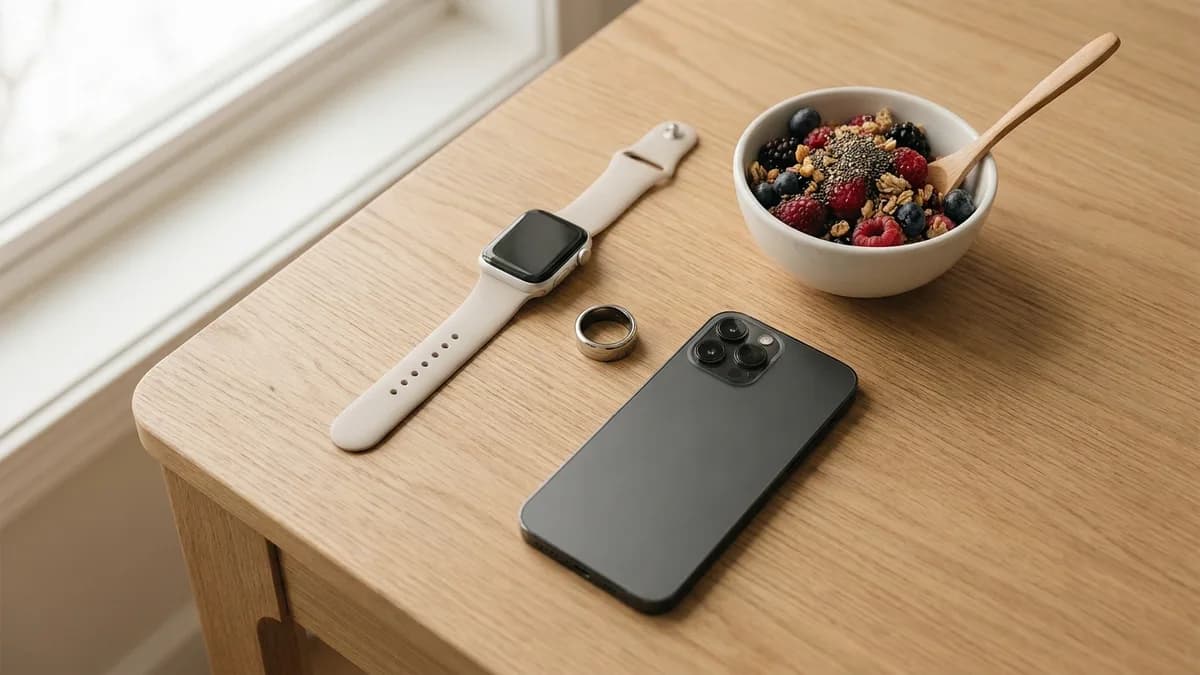
If you fall into that second group and you carry an iPhone, there is a privacy-friendlier route that gets you most of the same recovery and sleep picture: pair an Apple Watch with a recovery app that keeps your data on-device through Apple Health, instead of routing it to a third-party cloud. We cover the trade-offs in detail in our guide to the best Fitbit alternatives, and one on-device option we reviewed separately is covered in our Livity review. It will not match the Air's price, but it keeps your data yours and avoids a recurring subscription for the core metrics.
Who the Fitbit Air is for
The Air makes the most sense if a few things are true at once:
- You want 24/7 wear, including overnight, and a chunky smartwatch keeps coming off.
- You are already comfortable in Google's ecosystem and have a Google account.
- You are happy to check your stats in an app, not on your wrist.
- You are willing to pay for Premium to unlock the full experience.
If all four are true, $99.99 for this sensor package is a fair deal, and the band is one of the most comfortable continuous trackers we have worn.
Who should skip it
Skip the Air if you want at-a-glance information on your wrist, if you would rather pay once than subscribe, or if handing continuous health data to Google is a non-starter. iPhone owners in particular have a cleaner, more private path available, and serious runners or cyclists are still better served by a dedicated GPS watch — see our best running apps and best recovery and readiness apps for those routes.
Pros
- Genuinely small and light — easy to wear 24/7, including overnight
- Strong sensor suite for the price (HR, HRV, SpO2, AFib alerts)
- Up to a week of battery and a standard USB-C charger at last
- Works with both iPhone (iOS 16.4+) and Android (11+)
Cons
- No screen — you are tied to your phone for every metric
- Most insights and the Health Coach sit behind Google Health Premium
- Annual subscription rose to $99.99/yr (was $79.99)
- Requires a Google account and routes health data to Google
Verdict
The Fitbit Air is a well-judged piece of hardware wrapped in a business model that asks a lot. At $99.99 for a 12-gram band with 24/7 heart rate, HRV, SpO2, AFib alerts, week-long battery, and — finally — USB-C charging, the device itself is easy to like. The friction is everything around it: the missing screen ties you to your phone, the best insights live behind a $99.99/year subscription that just got more expensive, and the whole thing only works if you are willing to run your health data through a Google account.
For committed Google users who want an invisible, always-on tracker and do not mind paying for Premium, it earns its 3.8 out of 5 and is one of the better screen-free bands you can buy in 2026. For privacy-conscious iPhone owners, the more sensible move is an Apple Watch paired with an on-device recovery app — you keep your data, skip the subscription on the basics, and still get the recovery, sleep, and HRV picture the Air is selling. Start with our best Fitbit alternatives roundup to weigh those options side by side.
Sources
- 1.Introducing the new Google Fitbit Air— Google Blog, 2026
- 2.A new era for your wellness: Introducing the Google Health app— Google Blog, 2026
- 3.Google Fitbit Air, Fitness Activity Tracker Band— Google Store, 2026
- 4.Fitbit App Becomes Google Health on May 19 With Annual Subscription Price Increase— gHacks Tech News, 2026
Frequently Asked Questions
- How much does the Fitbit Air cost?
- The Fitbit Air is $99.99. A Stephen Curry special edition runs $129.99. Each band includes a three-month trial of Google Health Premium; after that, Premium is $9.99/month or $99.99/year.
- Does the Fitbit Air have a screen?
- No. The Fitbit Air is deliberately screen-free. It passively collects data and presents everything in the Google Health app on your phone, so you cannot glance at your wrist for a recovery score or notification.
- Do I need a Google account and a subscription?
- You need a Google account and the Google Health app to set the band up and sync data. Basic metrics work without paying, but the deeper insights and the Gemini-based Health Coach require Google Health Premium.
- Does the Fitbit Air work with an iPhone?
- Yes. The Fitbit Air pairs with iOS 16.4 or later through the Google Health app. That said, iPhone owners who care about privacy may prefer pairing an Apple Watch with a recovery app that keeps data on-device.
Related reading

Gentler Streak Review (2026): The Anti-Burnout Fitness App, Honestly Assessed
Gentler Streak swaps guilt-driven streaks and numeric scores for compassionate, qualitative coaching — and it mostly works. Our honest, balanced review of pricing, pros, and real limitations.

Bevel Review (2026): Is the Priciest Health App Worth It?
Bevel pulls recovery, sleep, strain, and nutrition into one clean dashboard and reads Apple Watch, Oura, Garmin, and Fitbit data. It's also the most expensive app in its category. Here's our honest review.

Athlytic Review (2026): Is It the Best Recovery App for Apple Watch?
Athlytic turns your Apple Watch into a WHOOP-style recovery tracker with a personal 60-day baseline, an Effort score, and a Sleep Quality score — all built on Apple Health, with no separate account or subscription floor. Here is our honest take.